
Even the busiest weeknights can become an adventure in flavor with the right recipe up your sleeve. When I first discovered Gochujang Chicken, I was instantly hooked by the tantalizing blend of sweet, spicy, and savory that dances on your taste buds. Imagine succulent chicken thighs glazed in a glossy, sticky marinade that transforms your dinner table into a culinary feast in just 30 minutes.
This dish is a delightful way to break free from the repetitive cycle of fast food, and it brings a taste of Korea straight to your kitchen. With each bite, the gochujang delivers a fiery kick that’s perfectly balanced by a hint of honey, creating an explosion of flavors that’s sure to please. Whether you choose to bake it for a hands-off approach or pan-cook it for a quick sear, Gochujang Chicken is versatile enough to suit any cooking style. Join me as we embark on this flavorful journey and redefine what a satisfying weeknight dinner can be!
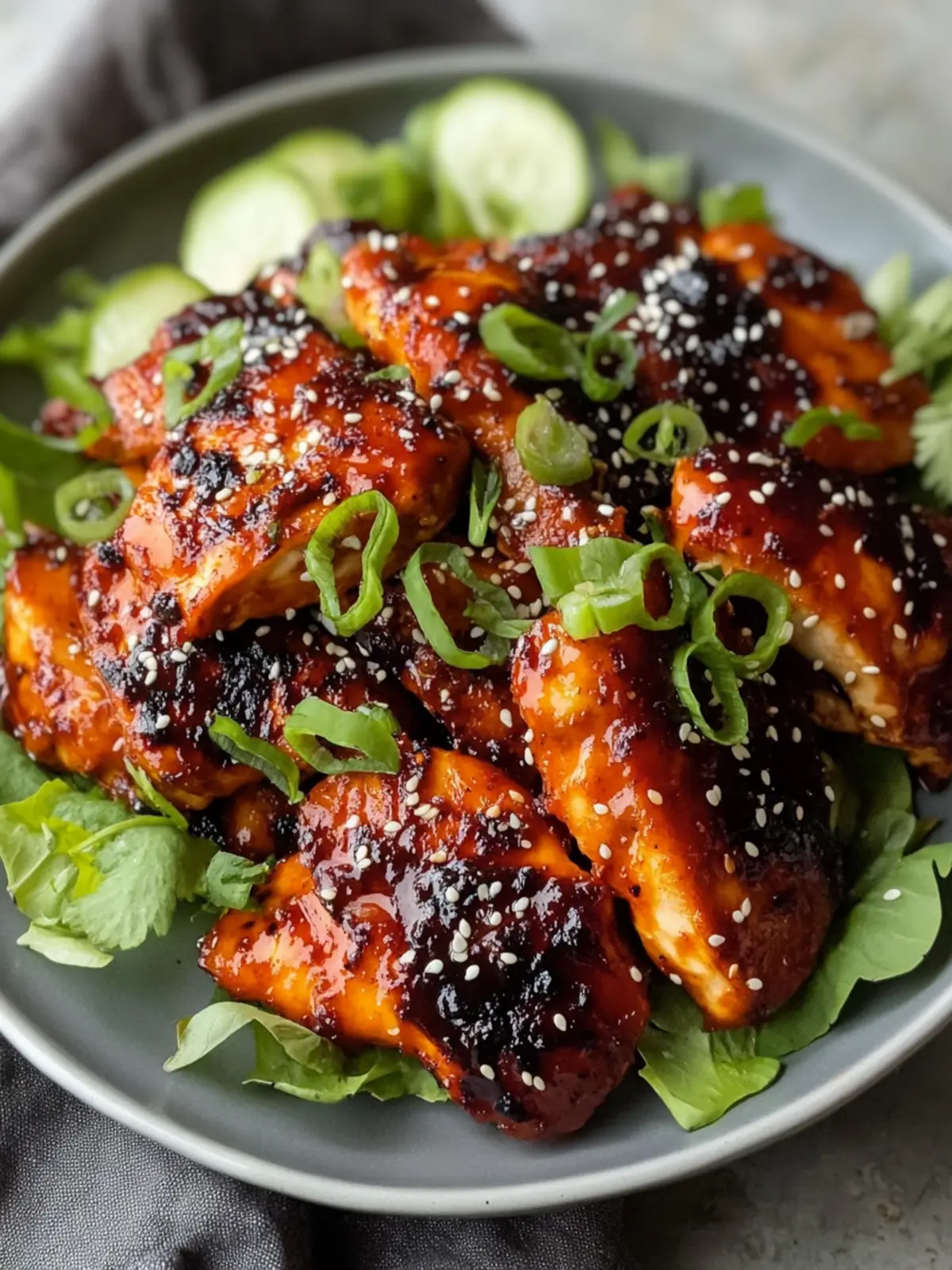
Why is Gochujang Chicken a Must-Try?
Flavor explosion: The contrast of sweet honey and spicy gochujang creates an unforgettable taste that lingers with every bite.
Quick preparation: Ready in just 30 minutes, making it perfect for those busy weeknights.
Versatile cooking methods: Choose between baking or pan-cooking based on your time and preference.
Meal diversity: Pair it with rice or salad for a complete meal, or mix in veggies for a one-pan wonder.
Crowd-pleaser: This dish is sure to impress family and friends, elevating any casual dinner to a delightful gathering.
Gochujang Chicken Ingredients
For the Marinade
- Gochujang Paste – The star ingredient that provides a spicy kick and authentic flavor.
- Soy Sauce – Enhances umami taste and can be swapped with gluten-free soy sauce for dietary needs.
- Honey or Maple Syrup – Balances the spice with sweetness; maple syrup is a great vegan alternative.
- Rice Vinegar – Adds a tangy acidity that expertly balances flavors.
- Garlic (minced) – Infuses aromatic depth for a more robust flavor profile.
- Fresh Ginger (grated) – Offers a zesty note that complements and brightens the sauce.
For Cooking
- Sesame Oil – Delivers a nutty aroma and is essential for the ultimate flavor experience.
- Neutral Oil (like vegetable or canola) – Used for cooking; substitute with olive oil if preferred.
For Garnishing
- Spring Onions (thinly sliced) – Adds a fresh, crisp texture and a mild onion flavor on top.
- Sesame Seeds – For that final touch of nutty crunch.
This recipe for Gochujang Chicken not only tantalizes your taste buds but also makes dinner prep a breeze. Happy cooking!
How to Make Gochujang Chicken
-
Prepare the Marinade: In a medium bowl, whisk together gochujang, soy sauce, honey, rice vinegar, garlic, and ginger until smooth. Add a little water if the mixture feels too thick.
-
Marinate the Chicken: Pat the chicken thighs dry with paper towels for better flavor adherence. Coat them with the marinade thoroughly and let them chill in the fridge for at least 30 minutes, or longer if you want richer flavors.
-
Preheat Cooking Surface: Preheat your oven to 200°C (400°F) if you’re baking, or heat a skillet over medium-high heat for pan-cooking.
-
Cook the Chicken:
- Baking: Arrange the marinated chicken on a lined baking sheet, drizzling any remaining marinade over the top. Bake for 18–22 minutes until the edges turn slightly charred and the chicken is cooked through.
- Pan-Cooking: Sear the chicken in the skillet for 5–7 minutes on each side, ensuring they achieve a caramelized, golden-brown color and reach an internal temperature of 75°C (165°F).
- Rest and Serve: Allow the chicken to rest for a few minutes off the heat. Drizzle with sesame oil, then sprinkle with sliced spring onions and sesame seeds. Serve whole or sliced alongside your favorite sides.
Optional: Garnish with fresh herbs for an extra layer of flavor.
Exact quantities are listed in the recipe card below.
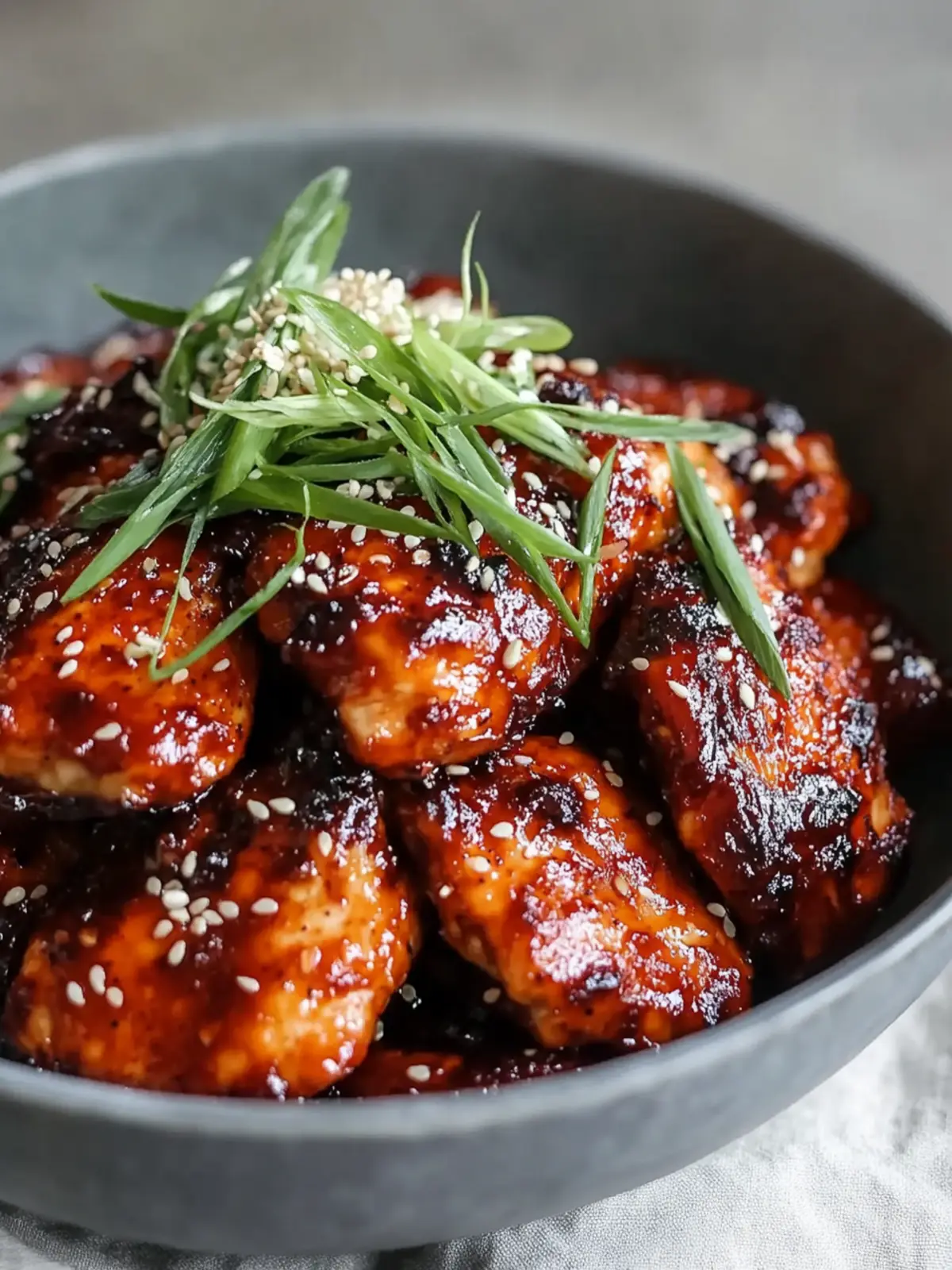
Helpful Tricks for Gochujang Chicken
-
Pat Dry First: Ensure the chicken is dry before marinating; this helps the sauce adhere better for a richer flavor experience.
-
Rest After Cooking: Allow the chicken to rest for about 5 minutes after cooking. This step locks in moisture, keeping your Gochujang Chicken juicy and tender.
-
Monitor Temperature: Use a meat thermometer to check that the internal temperature reaches 75°C (165°F). Overcooking can lead to dry chicken, so keep an eye on it!
-
Customize Marinade Time: For added depth of flavor, feel free to marinate the chicken longer than 30 minutes. Just don’t exceed a few hours to prevent the meat from becoming too salty.
-
Reduce Waste: Save leftover marinade! Use it as a sauce by simmering it in a pan until thickened, adding layers of flavor to your Gochujang Chicken.
Make Ahead Options
These delicious Gochujang Chicken thighs are perfect for meal prep, making weeknight dinners a breeze! You can marinate the chicken up to 24 hours in advance, simply mix the gochujang, soy sauce, honey, rice vinegar, garlic, and ginger, then coat your chicken and refrigerate. Additionally, if you have leftover cooked chicken, it can be stored in an airtight container for up to 3 days in the fridge—great for quick salads or wraps! When you’re ready to enjoy your Gochujang Chicken, simply reheat it in the oven or a skillet until warmed through. This way, you ensure that your chicken remains just as delicious and juicy as if it were freshly cooked!
How to Store and Freeze Gochujang Chicken
-
Fridge: Store leftovers in an airtight container for up to 3 days. This keeps your Gochujang Chicken fresh, ensuring you can enjoy those delicious flavors again!
-
Freezer: Freeze portions in a suitable container or freezer bag for up to 2 months. Make sure to label with the date to track freshness.
-
Thawing: When ready to enjoy again, thaw in the fridge overnight or use the microwave’s defrost setting to speed up the process.
-
Reheating: Reheat gently in a skillet over low heat with a splash of water to maintain moisture. Aim for an internal temperature of 75°C (165°F) before serving.
Gochujang Chicken Variations & Substitutions
Feel free to play around with these ideas to make this dish your own; your taste buds will thank you!
- Chicken Breasts: Substitute chicken thighs for breasts for a leaner, lighter version while still capturing the delicious flavors.
- Vegetable Medley: Toss in bell peppers or broccoli during cooking to make it a colorful, one-pan meal bursting with nutrients.
- Vegan Option: Replace honey with agave syrup or maple syrup for a delightful, vegan-friendly sweetener.
- Spicy Kick: Add more gochujang or a touch of red pepper flakes for those who crave extra heat in every bite.
- Citrus Twist: Squeeze fresh lime or lemon juice over the finished dish for a bright, zesty finish that enhances the flavor.
- Flavorful Marinade: Experiment with coconut aminos instead of soy sauce for a unique sweetness and added depth.
- Texture Boost: Incorporate toasted sesame seeds into the marinade for that added nutty crunch and aroma.
- Herbaceous Touch: Mix in fresh cilantro or basil as a garnish for a fresh, vibrant flavor to elevate your dish further.
Each of these variations provides a unique twist that complements the core essence of Gochujang Chicken, allowing you to craft a meal that’s perfect for your palate!
What to Serve with Gochujang Chicken?
Creating a memorable meal is about finding the right pairings to complement each dish’s unique flavors.
- Steamed Jasmine Rice: The fluffy, slightly sticky texture of jasmine rice absorbs the savory sauce, making every bite a delight.
- Fresh Cucumber Salad: Crisp cucumbers dressed in a light vinaigrette balance the heat of the chicken, offering a refreshing contrast.
- Garlic Bok Choy: Sautéed bok choy infused with garlic provides a tender-crisp texture that enhances the umami flavors of the dish.
- Spicy Kimchi: This iconic Korean side dish adds liveliness to your plate with its zesty, fermented taste, enhancing the spicy notes of the chicken.
- Roasted Sweet Potatoes: Their natural sweetness pairs beautifully with the spicy marinade, creating a harmonious blend that satisfies.
- Chilled Soju: A traditional Korean drink, soju’s smoothness helps mellow the heat, making for a delightful dining experience.
- Mango Sticky Rice: For dessert, this sweet treat brings a delightful end to the meal, as its creamy coconut flavors complement the spiciness.
- Sesame Green Beans: Tender green beans with a touch of sesame oil offer a nutty crunch that echoes the sesame seeds in the chicken.
- Carrot Slaw: A crunchy slaw with a hint of sweetness adds brightness, balancing the rich flavors of the Gochujang Chicken.
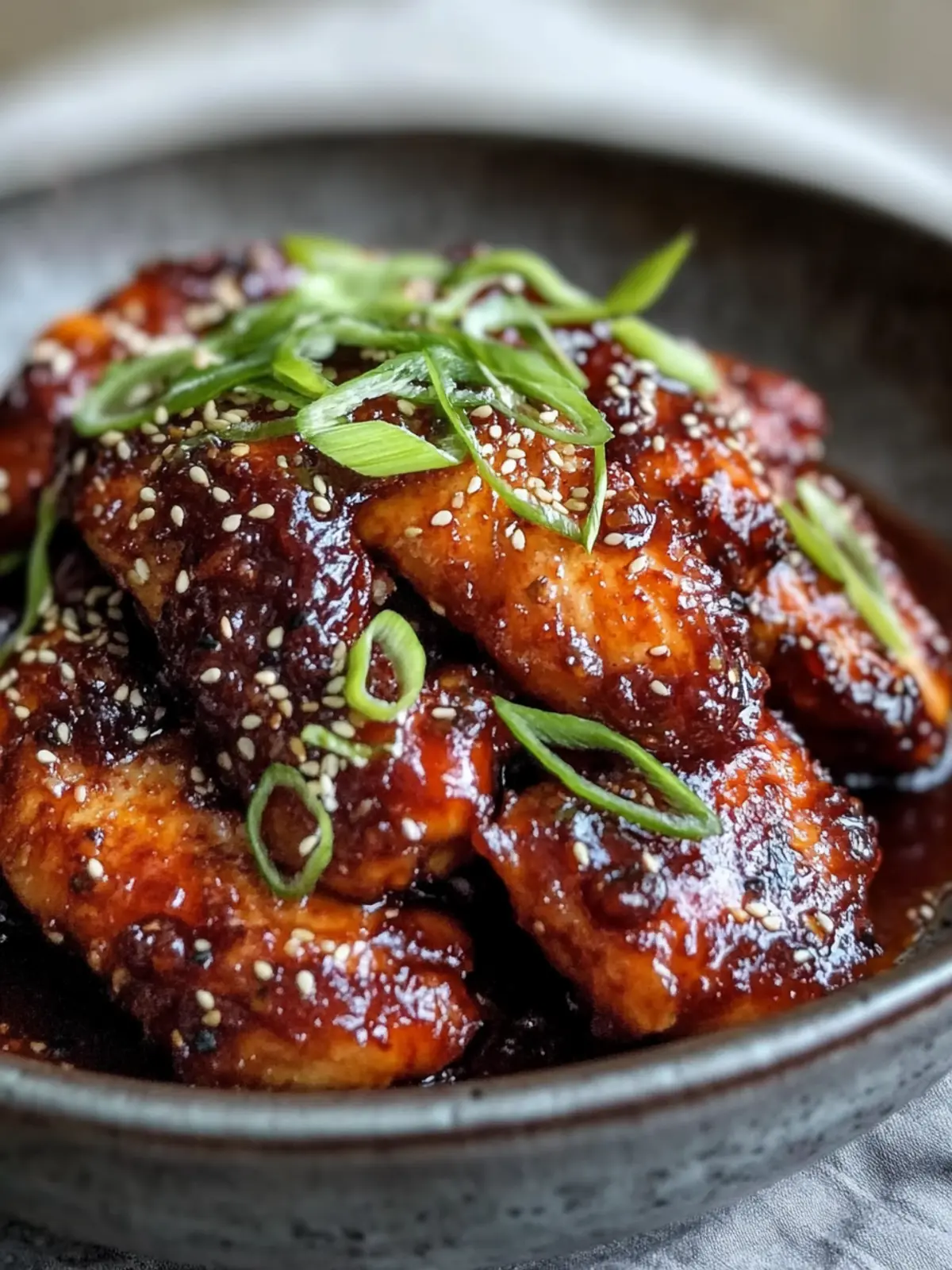
Gochujang Chicken Recipe FAQs
What should I look for when selecting gochujang paste?
Absolutely! When choosing gochujang paste, opt for high-quality brands made with natural ingredients. Avoid those with additives or artificial flavors. Look for a vibrant red color, which indicates a fresh, rich flavor profile!
How should I store leftover Gochujang Chicken?
Very! Store any leftover Gochujang Chicken in an airtight container in the fridge for up to 3 days. This way, you can enjoy the deliciousness again! Just make sure it’s cool before sealing to avoid condensation.
Can I freeze Gochujang Chicken?
Of course! To freeze, place the chicken in a suitable container or freezer bag, ensuring any air is removed. It can be stored for up to 2 months. Label with the date for tracking. When you’re ready to eat, just thaw in the fridge overnight before reheating.
What do I do if the marinade is too thick?
If you find the marinade too thick, don’t worry! Simply whisk in a little bit of water, one tablespoon at a time, until you reach your desired consistency. Remember, a smooth marinade helps the chicken soak up all that fabulous flavor!
Is Gochujang suitable for people with gluten allergies?
Yes, you can enjoy Gochujang Chicken if you’re gluten-sensitive! Just choose gluten-free soy sauce and ensure your gochujang paste is gluten-free as well. Always check the labels—some brands have wheat flour added, so be mindful!
Can I add vegetables to the recipe?
Absolutely! Incorporating vegetables is a fantastic idea. You can toss in sliced bell peppers, zucchini, or broccoli during the last few minutes of baking or cooking the chicken. This makes for a delicious, nutritious one-pan meal while enhancing the overall flavor!
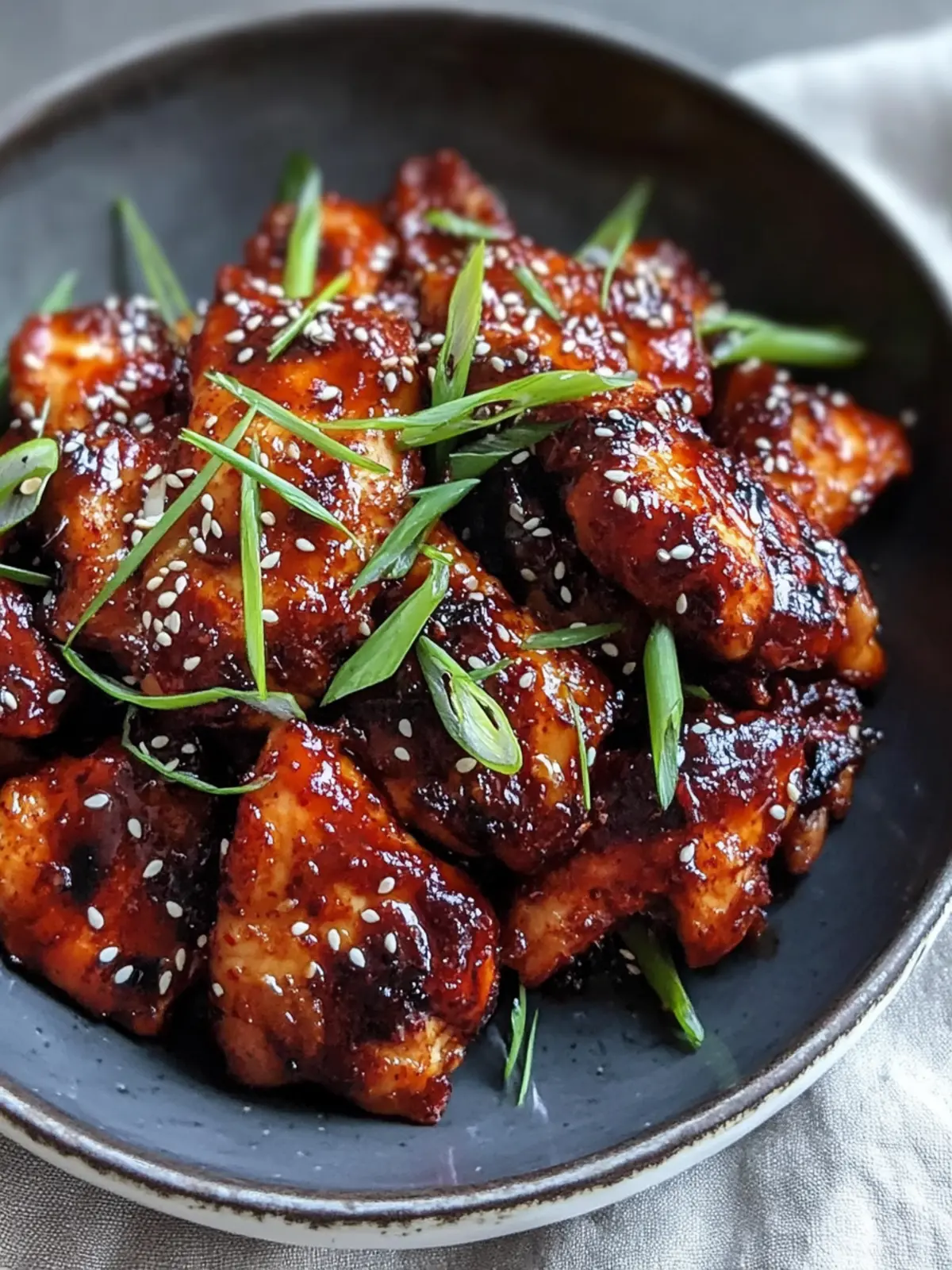
Savory Gochujang Chicken You Can Make in 30 Minutes
Ingredients
Equipment
Method
- In a medium bowl, whisk together gochujang, soy sauce, honey, rice vinegar, garlic, and ginger until smooth.
- Pat the chicken thighs dry with paper towels. Coat them with the marinade and let them chill in the fridge for at least 30 minutes.
- Preheat your oven to 200°C (400°F) if baking, or heat a skillet over medium-high heat for pan-cooking.
- For Baking: Arrange marinated chicken on a lined baking sheet and bake for 18–22 minutes until cooked through.
- For Pan-Cooking: Sear chicken in skillet for 5–7 minutes on each side until golden-brown.
- Allow the chicken to rest for a few minutes off the heat. Drizzle with sesame oil and sprinkle with spring onions and sesame seeds.