
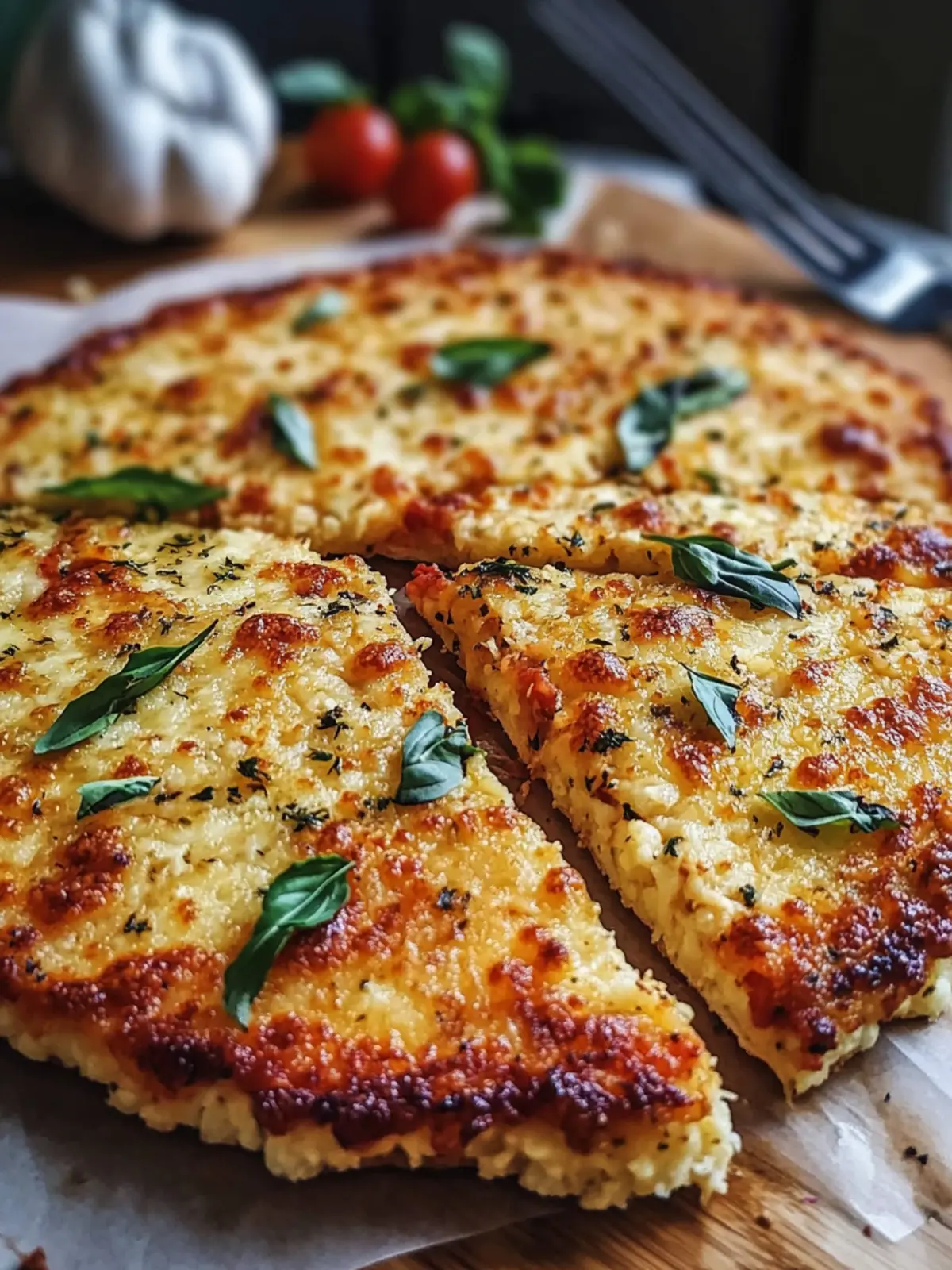
This cauliflower pizza crust is the easy, gluten-free, low-carb pizza base you make when you want real pizza flavor without a heavy dough. It bakes golden at the edges, stays firm enough to hold sauce and toppings, and gives you that satisfying pizza-night feeling with a lighter, vegetable-based crust.
The secret is simple: cook the riced cauliflower, cool it slightly, then squeeze out as much moisture as possible before mixing it with egg, cheese, and seasonings. That one step is what turns a soft cauliflower mixture into a crispy cauliflower pizza crust instead of a soggy one.
Whether you follow a gluten-free diet, want a lower-carb dinner, or just need a creative way to use a head of cauliflower, this recipe is a dependable choice. It uses everyday ingredients, bakes in about 25 minutes, and can be topped with marinara, mozzarella, vegetables, pepperoni, fresh basil, or anything you normally enjoy on pizza.
What Makes This Recipe Worth Making
This cauliflower pizza crust gives you the comfort of homemade pizza with a lighter ingredient list. Instead of flour and yeast, the base is made with cauliflower, egg, mozzarella, Parmesan, oregano, garlic powder, salt, and pepper.
It is also flexible. You can keep it vegetarian, make it extra cheesy, use low-fat cheese, add Italian herbs, or top it with your favorite protein. The crust works especially well for weeknight dinners because the prep is simple and the bake time is short.
Best of all, the texture is sturdy when you follow the moisture-removal step. A good cauliflower pizza crust should not fall apart when you pick up a slice. It should be crisp around the edges, firm in the center, and flavorful enough to taste good even before the toppings go on.

Recipe Overview
Prep Time: 15 minutes
Cook Time: 25 minutes
Total Time: 40 minutes
Servings: 4 slices
Course: Gluten-Free Dinner
Cuisine: Italian-Inspired
Diet: Gluten-Free, Low-Carb
Equipment You Need
Food processor
Microwave-safe bowl
Clean kitchen towel or cheesecloth
Mixing bowl
Baking sheet
Parchment paper
Oven
Ingredients
For the Crust
1 large head cauliflower, cut into florets
1 large egg, lightly beaten
1 cup shredded mozzarella cheese
1/4 cup grated Parmesan cheese
1 teaspoon dried oregano
1 teaspoon garlic powder
Salt, to taste
Black pepper, to taste
Optional Toppings
Pizza sauce or marinara
Extra mozzarella
Fresh basil
Sliced tomatoes
Mushrooms
Bell peppers
Olives
Cooked chicken
Pepperoni
Red pepper flakes
How to Make Cauliflower Pizza Crust
1. Preheat the oven
Preheat your oven to 400°F, or 200°C. Line a baking sheet with parchment paper so the crust releases easily after baking. Parchment also helps prevent sticking and makes cleanup faster.
2. Rice the cauliflower
Add the cauliflower florets to a food processor and pulse until the pieces look like rice. You should have about 4 cups of riced cauliflower. Avoid over-processing it into a paste, because the crust needs texture to hold together.
3. Cook the cauliflower
Transfer the riced cauliflower to a microwave-safe bowl. Microwave for 4 to 5 minutes, or until softened. Let it cool for a few minutes so it is safe to handle.
4. Squeeze out the moisture
Place the cooked cauliflower in a clean kitchen towel or cheesecloth. Twist the towel tightly and squeeze until as much liquid as possible comes out. This is the most important step in the recipe. Dry cauliflower creates a crisp cauliflower pizza crust, while wet cauliflower creates a soft one.
5. Mix the crust
Add the squeezed cauliflower to a mixing bowl. Stir in the egg, mozzarella, Parmesan, oregano, garlic powder, salt, and pepper. Mix until everything is evenly combined. The mixture should feel moist but not watery.
6. Shape the crust
Transfer the mixture to the prepared baking sheet. Press it into a 10-inch round crust, keeping the thickness even from the center to the edges. Press firmly so the mixture compacts and holds its shape.
7. Bake until golden
Bake for 20 to 25 minutes, or until the edges are golden and the center feels firm. The crust should look dry on top and lightly browned around the outside.
8. Add toppings and bake again
Remove the crust from the oven. Add a thin layer of sauce, cheese, and your favorite toppings. Return it to the oven for 5 to 10 minutes, or until the cheese melts and the toppings are hot.
9. Slice and serve
Let the cauliflower pizza crust rest for 2 to 3 minutes before slicing. This short cooling time helps the crust set, making it easier to lift and serve.

The Secret to a Crispy Crust
The biggest mistake people make with a cauliflower pizza crust is leaving too much water in the cauliflower. Cauliflower naturally holds a lot of moisture, and that moisture turns to steam in the oven. Steam makes the crust soft, not crisp.
After microwaving, squeeze the cauliflower until it looks almost dry and clumps together. You may be surprised by how much liquid comes out. Do not skip this step, even if the cauliflower looks dry at first.
Another helpful tip is to spread the crust thin enough to crisp but not so thin that it breaks. A 10-inch round works well for this recipe. If you make the crust larger, it may become fragile. If you make it too thick, the center may stay soft.
Best Toppings for Cauliflower Pizza
This cauliflower pizza crust works best with toppings that are flavorful but not too wet. Use a light layer of pizza sauce instead of a heavy one. Drain watery vegetables, pat fresh mozzarella dry, and avoid piling on too many toppings at once.
Great topping combinations include:
Margherita style with tomato, mozzarella, and basil
Mushroom and spinach with a sprinkle of Parmesan
Chicken, red onion, and a light barbecue sauce
Pepperoni and mozzarella with red pepper flakes
Roasted vegetables with olives and Italian herbs
Because cauliflower pizza crust is more delicate than traditional dough, balanced toppings give you the best texture.
Expert Tips
Use fresh cauliflower for the best flavor. Frozen cauliflower can work, but it must be thawed, cooked, and squeezed very well.
Use parchment paper. It helps the crust lift cleanly from the baking sheet.
Press the crust firmly. A compact crust holds together better after baking.
Pre-bake before adding toppings. This helps the base firm up and prevents sogginess.
Do not overload the sauce. A thin layer gives flavor without making the crust wet.
Let it rest before slicing. A few minutes of cooling helps the cheese and egg bind the crust.
Ingredient Swaps and Variations
For a dairy-free version, replace the Parmesan with nutritional yeast and use your favorite dairy-free mozzarella. The texture may be slightly softer, but the flavor will still be savory.
For a stronger herb flavor, add Italian seasoning, fresh basil, parsley, or a pinch of rosemary. For heat, mix in crushed red pepper flakes or a little cayenne.
For extra structure, add 1 to 2 tablespoons of almond flour to the mixture. This can help absorb moisture and give the cauliflower pizza crust a slightly firmer bite.
You can also try broccoli instead of cauliflower for a different flavor. The method is the same: rice it, cook it, squeeze it dry, mix, shape, and bake.
What to Serve With It
Serve this pizza with a crisp green salad, roasted vegetables, or a simple bowl of soup. A light salad with lemon vinaigrette balances the cheesy crust nicely. Marinara sauce on the side also makes a great dip for the edges.
For a full low-carb cauliflower pizza crust meal, pair the pizza with cucumber salad, garlic roasted zucchini, or sautéed spinach. For a family pizza night, make two crusts and set out different toppings so everyone can build their own.
Make-Ahead Instructions
You can prepare the crust ahead of time by baking it once, letting it cool, and storing it in the refrigerator. When you are ready to eat, add toppings and bake again until hot and melted.
For best results, store the plain baked crust rather than a fully topped pizza. This keeps the texture crisp and prevents the sauce from soaking into the base.
How to Store and Reheat
Store leftover cauliflower pizza crust slices in an airtight container in the refrigerator for up to 3 days. Reheat in a 375°F oven or toaster oven until warm and crisp. Avoid microwaving if possible, because it can soften the crust.
To freeze, bake the plain crust, let it cool completely, then wrap it tightly. Freeze for up to 1 month. Reheat from frozen at 375°F until hot, then add toppings and bake again.
Common Questions
Is cauliflower pizza crust gluten-free?
Yes, this recipe is naturally gluten-free because it does not use wheat flour. Always check the labels on cheese, sauces, and toppings to make sure every ingredient is gluten-free.
Is it low-carb?
Yes, this cauliflower pizza crust is lower in carbohydrates than traditional flour-based pizza dough. It is a popular option for people who want a lighter pizza base.
Why is my crust soggy?
The cauliflower was likely not squeezed dry enough, or the toppings were too wet. Cook the cauliflower, cool it slightly, squeeze it thoroughly, and use a light layer of sauce.
Can I make it without a food processor?
Yes. Use a box grater to grate the cauliflower into rice-sized pieces. The texture may be a little less even, but it still works.
Can I double the recipe?
Yes. Double the ingredients and make two separate crusts. Avoid making one very large crust, because it can be harder to flip, slice, and serve.
Final Thoughts
A homemade cauliflower pizza crust is one of the easiest ways to enjoy pizza while keeping dinner gluten-free, low-carb, and full of flavor. With the right technique, the crust turns golden, crisp, and sturdy enough for your favorite toppings.
The key is to remove moisture, press the mixture firmly, and pre-bake before adding sauce. Once you master those steps, this cauliflower pizza crust recipe becomes a reliable pizza-night favorite you can customize again and again.

5 Easy Cauliflower Pizza Crust Secrets for a Perfect Crispy Base
Ingredients
Equipment
Method
- Preheat your oven to 400°F (200°C) and line a baking sheet with parchment paper.
- Process the cauliflower in a food processor until it resembles rice, about 4 cups.
- Microwave the riced cauliflower in a bowl for 4–5 minutes until soft; let it cool slightly.
- Squeeze out as much moisture as possible using a thin kitchen towel.
- Mix the dried cauliflower in a bowl with the egg, mozzarella, Parmesan, oregano, garlic powder, salt, and pepper until well combined.
- Spread the mixture onto the prepared baking sheet into a 10-inch circular shape.
- Bake for 20–25 minutes until the edges are golden and the crust is firm.
- Add your favorite sauce and toppings, then return to the oven for another 5–10 minutes until the cheese is melted and bubbly.