
As the leaves turn golden and the aroma of spices fills the air, it’s time to embrace the warmth of home-cooked comfort food. One of my all-time favorites, traditional German Sauerbraten, has a way of making any gathering feel like a cozy celebration. I stumbled upon this delightful recipe while exploring my family’s cultural roots, and it quickly became a staple at our family dinners. Imagine succulent beef, marinated for days, and slow-cooked to perfection, bathed in a rich, slightly tangy gravy that transports you straight to the heart of Germany.
Whether you’re hosting a festive Oktoberfest dinner or simply looking for a hearty weeknight meal, this dish is bound to impress. Its versatility shines through, with regional variations like the Rheinischer Sauerbraten, sweetened with raisins, and the Franconian style, rich with gingerbread spices. Join me in creating this iconic dish that not only nourishes the body but also warms the soul—a true testament to the power of homemade meals. Let’s dive into this comforting recipe together!
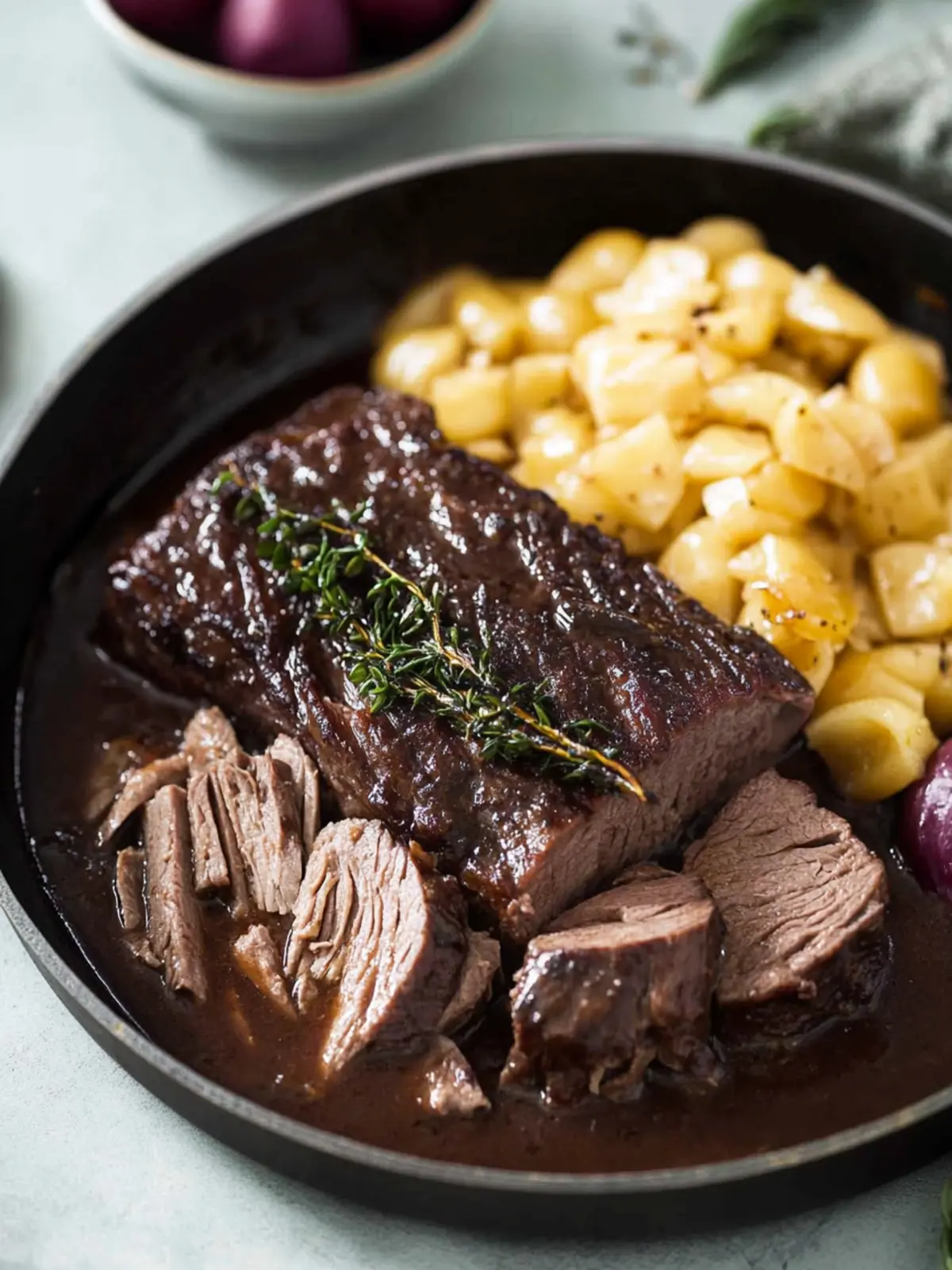
Why is Sauerbraten a must-try dish?
Comforting Tradition: Sauerbraten is more than just a meal; it’s a cherished tradition that brings family together.
Melt-in-Your-Mouth Beef: The marination process transforms tough cuts of meat into tender, succulent bites.
Unique Flavor Profile: With a blend of spices and a touch of sweetness, every bite is a delightful adventure for your palate.
Versatile Options: Whether you prefer the sweetness of Rheinischer Sauerbraten or the robust flavors of Franconian style, there’s a version for everyone.
Perfect for Celebrations: Ideal for special occasions like Oktoberfest, this dish elevates any gathering into a festivity.
Easy to Make Ahead: With simple preparation and a hands-off cooking method, you can focus on enjoying the company of loved ones.
Sauerbraten Ingredients
For the Marinade
- Red Wine – Adds depth and flavor to the marinade, opt for a full-bodied wine like Merlot.
- Red Wine Vinegar – Contributes acidity and tanginess to balance the flavors perfectly in Sauerbraten.
- Water – Helps dilute the marinade to ensure even flavor absorption in the meat.
- Onions – Provide natural sweetness and depth to enhance the overall taste of the dish.
- Carrots – Infuse sweetness and additional body to the rich gravy.
- Celery Root/Parsley Root – Offers an earthy flavor; parsnips can be a great substitute if needed.
- Juniper Berries – Impart a distinctive piney flavor that is characteristic of traditional German cuisine.
- Allspice Berries – Add warmth and complexity, making each bite enticingly aromatic.
- Bay Leaves – Enhance the flavor profile during marination and cooking.
- Peppercorns – Introduce a gentle heat and aromatic properties to the dish.
- Cloves – Contribute a sweet and aromatic touch, elevating the marinade’s flavor.
- Salt – Essential for seasoning the meat, bringing out its natural flavor.
- Sugar – Balances the acidity of the marinade, aiding in browning the meat beautifully.
For the Roast
- Beef Roast (Chuck, Rump, or Bottom Roast) – The main star of the dish, choose a cut suitable for slow braising.
- Ground Pepper – Use to season the meat before cooking for that extra kick.
- Vegetable Oil (e.g., Avocado Oil) – For searing the meat to create a flavorful crust.
For the Gravy
- German Gingerbread Spice – Optional, but adds a holiday aroma; substitute with cinnamon, ginger, nutmeg, and allspice blend if desired.
- German Bread (optional) – Used to thicken the gravy, can be omitted for a lighter texture.
- Cornstarch – A thickening agent for the gravy, to achieve your desired consistency.
- Honey (to taste) – Balances the sourness, making the gravy sweeter as per your preference.
How to Make Sauerbraten
-
Prepare the Marinade: In a saucepan, combine red wine, red wine vinegar, water, onions, carrots, celery root, juniper berries, allspice, bay leaves, peppercorns, cloves, and salt. Boil for 5 minutes, then let cool completely.
-
Marinate Beef: Place your chosen beef roast in a large zipper bag, pour the cooled marinade over the meat, seal the bag tightly, and refrigerate for 3-5 days. Turn the bag occasionally to ensure even marination.
-
Prepare for Roasting: Remove the beef from the marinade 30 minutes before cooking. Strain the marinade, reserving both the liquid and solids for later use.
-
Sear the Meat: Heat vegetable oil in a Dutch oven over medium-high heat. Season the beef with ground pepper, then sear it on all sides until it’s nicely browned, creating a flavorful crust.
-
Braise: Add the reserved vegetables back into the pot, pour in the strained marinade, bring it all to a boil, then cover with a lid and transfer to a preheated oven. Cook for 2 hours at 300°F.
-
Add Flavorings: After 2 hours, stir in the German gingerbread spice (if using), carefully turn the roast over, and continue braising for an additional hour.
-
Finish the Gravy: Once cooked, transfer the roast to a cutting board to rest. Strain the sauce, pressing the solids to extract flavors. Return the liquid to the pot, and if desired, add crumbled German bread or cornstarch to thicken. Adjust sweetness with honey as preferred.
-
Serve: Slice the roast and serve with the rich gravy, accompanied by homemade spaetzle, potato dumplings, or traditional German red cabbage.
Optional: Garnish with fresh parsley for a pop of color.
Exact quantities are listed in the recipe card below.
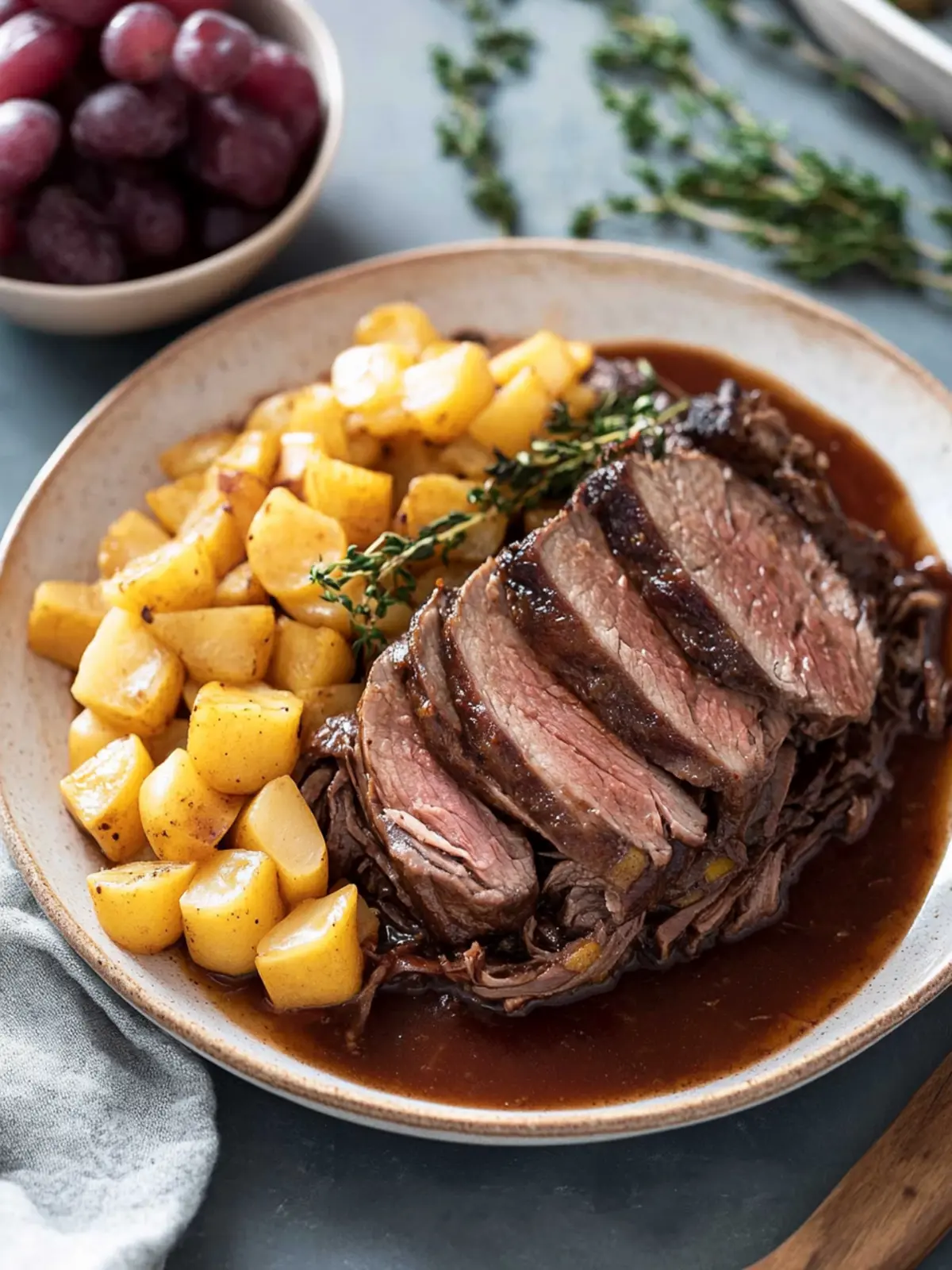
Sauerbraten Variations & Substitutions
Feel free to customize your Sauerbraten to suit your taste and dietary needs with these delicious variations!
- Pork Alternative: Swap beef for pork shoulder for a different flavor profile. It will still yield tender, juicy meat.
- Venison Twist: For a gamey flavor, use venison instead of beef. Just reduce cooking time slightly as it cooks faster.
- Vinegar Variety: Experiment with apple cider or balsamic vinegar for a unique taste in your marinade. Each will impart distinct flavors.
- Sweetness Adjustment: Balance the sauce’s acidity by adjusting sugar and honey to your preferred level of sweetness.
- Herb Infusion: Add fresh herbs like thyme or rosemary to the marinade for an aromatic twist. These herbs work beautifully with the rich flavors.
- Heat Level: Introduce a pinch of red pepper flakes for a gentle kick in the gravy or marinade, enhancing the overall experience.
- Vegetable Boost: Include other root vegetables like parsnips or turnips in the braising process to enhance the flavor and nutrition!
- Low-Sodium Option: Use low-sodium soy sauce instead of salt in the marinade; it offers a savory depth without the added saltiness.
Let your creativity flow as you make this classic dish your own!
What to Serve with Traditional German Sauerbraten?
As this hearty dish simmers, imagine the delightful spread that could accompany it, making your meal an unforgettable occasion.
-
Homemade Spaetzle: Light and fluffy, spaetzle perfectly soaks up the rich gravy, providing a delightful texture contrast to the tender beef.
-
Potato Dumplings: These soft, pillowy dumplings add a comforting starchiness that complements the tangy sauce beautifully.
-
German Red Cabbage: The sweet and tangy flavor of red cabbage enhances the dish’s savory aspects, creating a vibrant, balanced meal.
-
Robust German Bread: A thick slice of crusty bread is perfect for sopping up every bit of that luscious gravy, adding a rustic element to your dining experience.
-
Creamy Horseradish Sauce: A dollop of this zesty condiment brings a spicy kick, elevating the overall flavor profile of the Sauerbraten.
-
Pint of German Beer: Pairing your Sauerbraten with a chilled German lager or malt beer provides a refreshing contrast that enhances the meal’s flavors.
-
Rich Apple Strudel: Complete the meal with a slice of warm apple strudel, a classic dessert that offers a sweet ending to this culinary journey.
Imagine gathering around the table, laughter filling the air as you share not only Sauerbraten but also a feast that warms the heart and connects loved ones.
Expert Tips for Sauerbraten
- Marination Magic: Ensure the beef is fully submerged in the marinade for maximum flavor infusion. This is crucial for the best Sauerbraten results.
- No Gingersnaps: Avoid using gingersnap cookies as a thickener; it strays from tradition and alters the dish’s authentic taste.
- Resting is Key: Let the meat rest adequately after cooking. This helps maintain its juiciness and ensures perfect slicing.
- Balance Flavors: Taste and adjust the sweetness and acidity of the gravy before serving; personalize your Sauerbraten experience!
- Quality Ingredients: Use high-quality beef and fresh spices to elevate your Sauerbraten; great ingredients make all the difference.
Make Ahead Options
These Sauerbraten options are perfect for busy home cooks looking to save time without sacrificing quality! You can prepare the marinade and marinate the beef up to 5 days in advance. Simply follow the marinade instructions and keep the beef submerged in the fridge, turning it occasionally. After marination, strain the marinade and reserve the vegetables; you can cook the beef 24 hours ahead of your planned meal. After braising, allow the sauce to cool before refrigerating it overnight. When ready to serve, simply reheat the Sauerbraten and gravy on the stovetop until warmed through. This technique ensures your dish is just as delicious, providing tender beef and rich flavors with minimal effort on the day of serving!
Storage Tips for Sauerbraten
Fridge: Store leftover Sauerbraten in an airtight container for up to 3 days, ensuring it’s submerged in gravy to retain moisture and flavor.
Freezer: Freeze Sauerbraten for up to 3 months. Place it in a freezer-safe container, ensuring it is covered with gravy to avoid freezer burn.
Reheating: When ready to enjoy, thaw overnight in the fridge. Reheat on the stovetop over low heat, adding a splash of water or broth if the gravy thickens.
Serving Freshness: Always serve Sauerbraten warm, paired with your favorite sides for a delightful family meal that brings comfort and nostalgia.
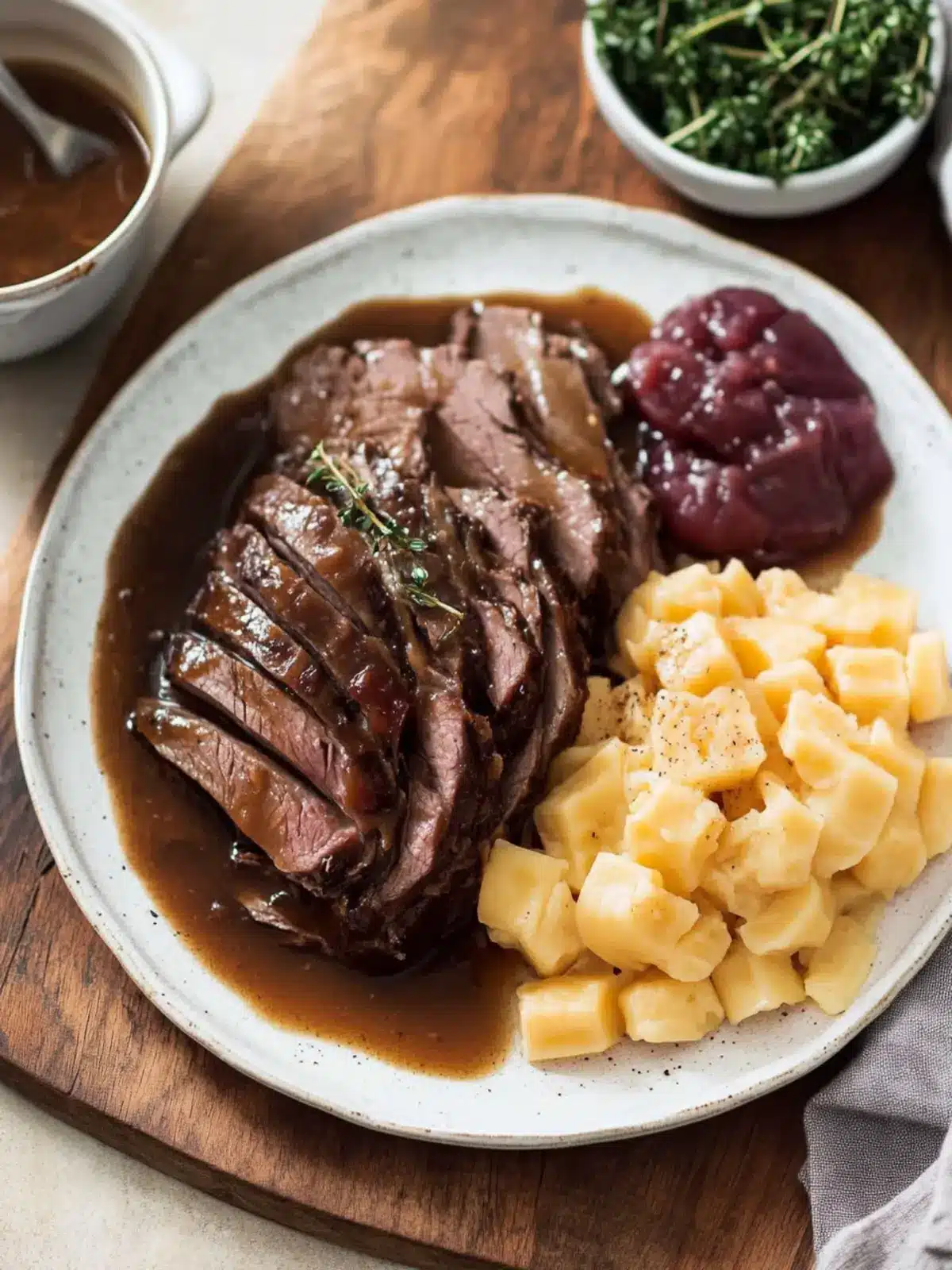
Sauerbraten Recipe FAQs
How do I select the right cut of beef for Sauerbraten?
Choosing the right cut of beef is essential for a tender Sauerbraten. Opt for tougher cuts like chuck, rump, or bottom roast. These cuts have a good amount of connective tissue that breaks down during the slow cooking process, resulting in melt-in-your-mouth goodness. Make sure the meat is well-marbled for added flavor and juiciness!
How should I store leftover Sauerbraten?
Absolutely! Leftover Sauerbraten can be stored in an airtight container in your fridge for up to 3 days. To keep the beef moist and flavorful, ensure it remains submerged in the gravy. If you need to keep it longer, you can freeze it; just make sure to place it in a freezer-safe container with enough gravy to cover it completely, which can last for up to 3 months.
Can I freeze Sauerbraten? If so, how?
Definitely! To freeze Sauerbraten, allow it to cool completely, then transfer it into a freezer-safe container. Make sure it’s covered with ample gravy to avoid freezer burn. For best results, label the container with the date. When you’re ready to enjoy, simply thaw in the refrigerator overnight, and reheat gently on the stovetop over low heat until warmed through.
What can I do if my gravy is too thin?
If your Sauerbraten gravy is too thin, no worries! You can thicken it easily. One method is to create a slurry by mixing 1 tablespoon of cornstarch with 1-2 tablespoons of cold water. Stir this mixture into the simmering gravy. Allow it to cook for a few minutes while stirring until you achieve your desired consistency. Another option is to crumble some German bread into the gravy, which will naturally thicken it while adding flavor.
Are there any dietary considerations for Sauerbraten?
Yes! If you or your guests have dietary restrictions, Sauerbraten can be adjusted easily. For gluten-free needs, use a gluten-free bread or omit the bread altogether and use cornstarch for the gravy. If you have allergies to specific spices, feel free to leave them out, as the dish is quite flexible. And note that you should avoid using any wine if necessary; you can substitute with low-sodium beef broth mixed with a splash of vinegar for acidity.
What should I serve with Sauerbraten?
The more the merrier! Sauerbraten pairs wonderfully with homemade spaetzle, potato dumplings, or even traditional German red cabbage. These sides complement the rich gravy perfectly and help round out a truly comforting meal. Plus, adding a fresh salad can provide a nice crunch and balance to the flavors on your plate.
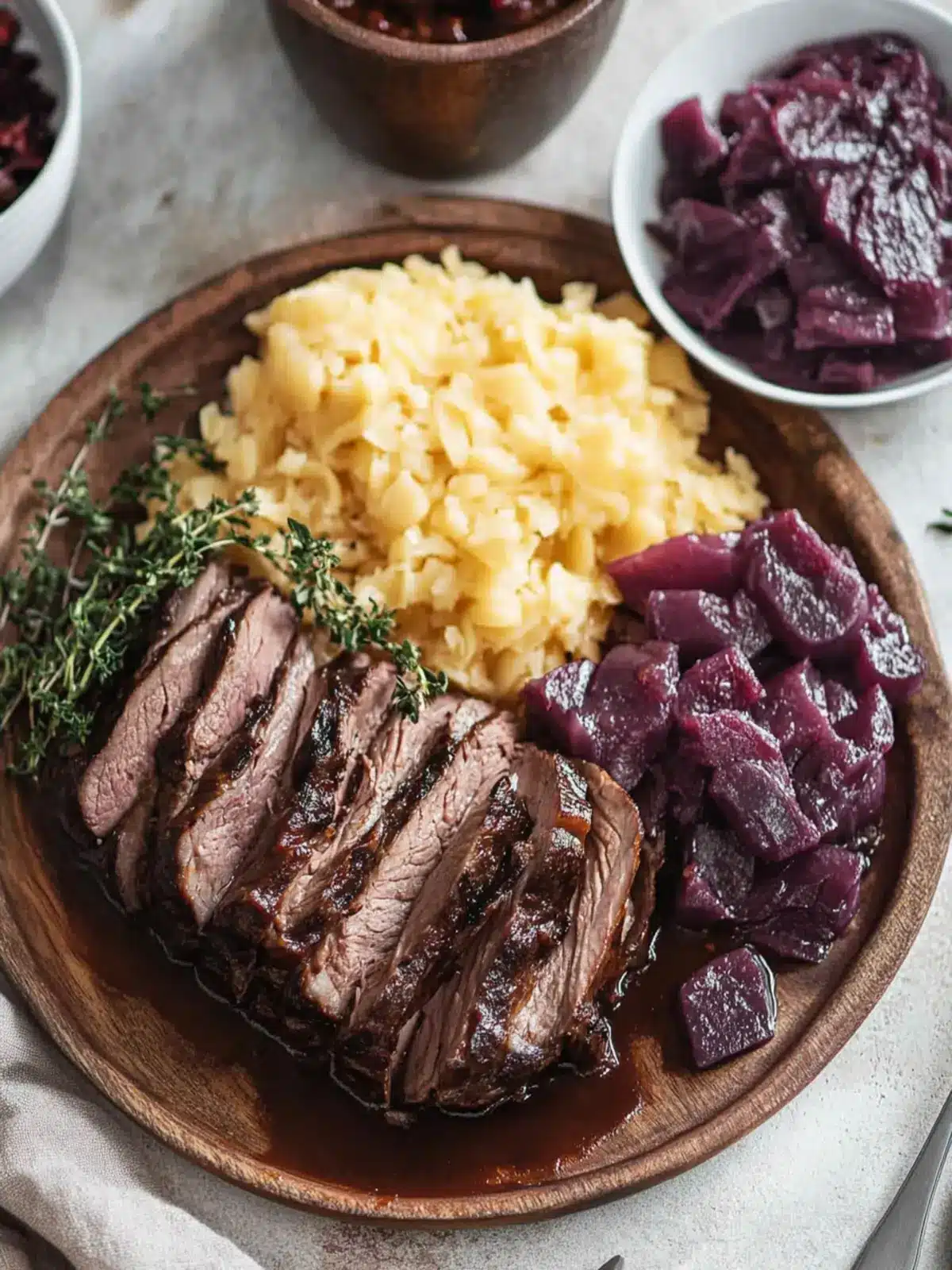
Irresistible Sauerbraten: A Cozy German Comfort Food Delight
Ingredients
Equipment
Method
- Prepare the Marinade: In a saucepan, combine red wine, red wine vinegar, water, onions, carrots, celery root, juniper berries, allspice, bay leaves, peppercorns, cloves, and salt. Boil for 5 minutes, then let cool completely.
- Marinate Beef: Place your chosen beef roast in a large zipper bag, pour the cooled marinade over the meat, seal the bag tightly, and refrigerate for 3-5 days. Turn the bag occasionally to ensure even marination.
- Prepare for Roasting: Remove the beef from the marinade 30 minutes before cooking. Strain the marinade, reserving both the liquid and solids for later use.
- Sear the Meat: Heat vegetable oil in a Dutch oven over medium-high heat. Season the beef with ground pepper, then sear it on all sides until it's nicely browned, creating a flavorful crust.
- Braise: Add the reserved vegetables back into the pot, pour in the strained marinade, bring it all to a boil, then cover with a lid and transfer to a preheated oven. Cook for 2 hours at 300°F.
- Add Flavorings: After 2 hours, stir in the German gingerbread spice (if using), carefully turn the roast over, and continue braising for an additional hour.
- Finish the Gravy: Once cooked, transfer the roast to a cutting board to rest. Strain the sauce, pressing the solids to extract flavors. Return the liquid to the pot, and if desired, add crumbled German bread or cornstarch to thicken. Adjust sweetness with honey as preferred.
- Serve: Slice the roast and serve with the rich gravy, accompanied by homemade spaetzle, potato dumplings, or traditional German red cabbage.