
There’s something incredibly satisfying about preparing a meal that blends quick and flavorful, leaving little room for compromise. My journey into making Spicy Tuna Kimbap was not just about feeding my hunger, but also rekindling a love for fresh, homemade delights sitting far too long on my culinary shelf. As I rolled those vibrant ingredients into tender rice and seaweed, I couldn’t help but appreciate the warm aromas drifting around my kitchen.
Perfect for lunches on the go or a snack that’s anything but ordinary, this spicy tuna version packs a delightful punch into each bite, with textures that dance between chewy and crunch. You can even mix it up with substitutes for a vegetarian spin or cruise into seafood territories using imitation crab. Whether you’re a seasoned chef or just dabbling in Asian flavors, this recipe is your gateway to a quick, savory meal that’s sure to impress. Let’s dive into making this easy and satisfying dish together!
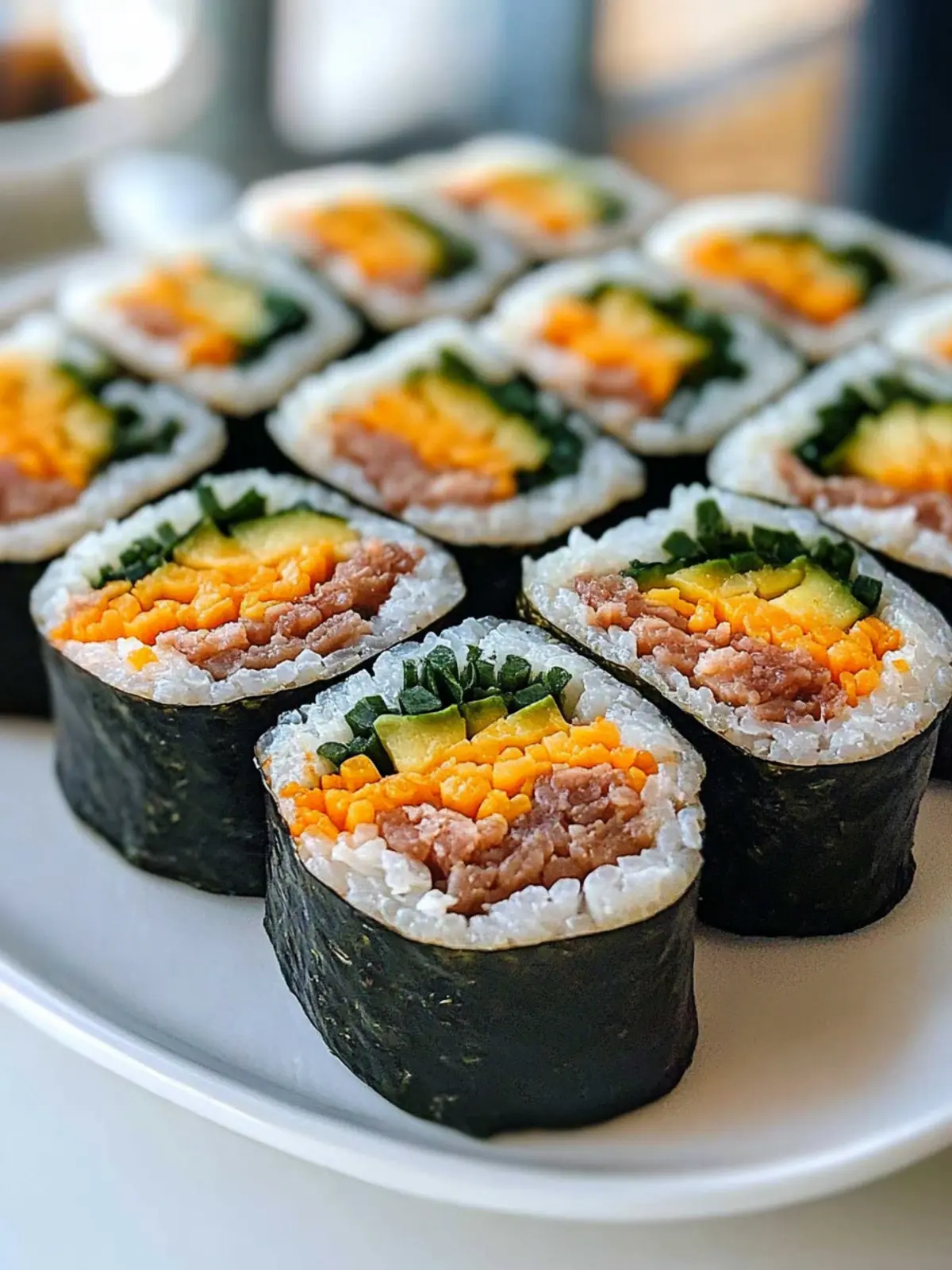
Why is Spicy Tuna Kimbap so amazing?
Quick preparation: This Spicy Tuna Kimbap can be whipped up in no time, making it a fantastic option for busy days.
Flavor explosion: The combination of spicy tuna, creamy mayonnaise, and crunch from fresh veggies means every bite is bursting with taste.
Versatile ingredients: Swap out tuna for chickpeas or imitation crab, creating endless variations to suit your diet.
Kid-friendly: Packed in lunchboxes or served as a snack, kids will love the delicious and fun-to-eat rolls.
Wholesome goodness: With nutritious ingredients like spinach and carrots, this dish is both satisfying and healthy, making it a guilt-free indulgence.
Easy and approachable: Perfect for beginners, preparing this delightful kimbap empowers you to explore Asian cuisine with confidence.
Spicy Tuna Kimbap Ingredients
For the Rice
• Short-Grain White Rice – Ensures a sticky texture essential for rolling, so avoid long-grain.
• Sesame Oil – Adds nuttiness to enhance overall flavor; toasted sesame oil makes it richer.
• Salt – Key for seasoning the rice; it balances the flavors perfectly.
For the Filling
• Canned Tuna (5 oz, drained) – The vital protein for kimbap; make sure to drain well to prevent sogginess.
• Mayonnaise – Brings creaminess to the filling; you can substitute with Greek yogurt for a lighter version.
• Gochujang (1 tbsp) – Infuses the dish with a spicy kick; adjust to your taste for more or less heat.
• Sugar – Balances the heat from the Gochujang; essential for the dish’s flavor profile.
For the Crunch
• Pickled Radish (danmuji, cut into strips) – Adds tanginess and texture; it’s a signature ingredient, so use if possible.
• Carrot (finely shredded, ½ cup) – Provides natural sweetness and crunch; cucumber is a refreshing alternative.
• Spinach (cooked and drained, ½ cup) – Adds nutritional value and vibrant color; consider blanched zucchini as a substitution.
Embrace the flavors of Spicy Tuna Kimbap and the creativity of substitutions while making this delightful dish your own!
How to Make Spicy Tuna Kimbap
-
Prepare Rice: Start by cooking your short-grain rice according to package directions. Once warm, gently mix in 1 tablespoon of sesame oil and 1 teaspoon of salt until evenly distributed, creating a sticky texture.
-
Make Filling: In a mixing bowl, combine 5 oz of drained canned tuna, 3 tablespoons of mayonnaise, 1 tablespoon of Gochujang, 1 teaspoon of sugar, and 1 teaspoon of sesame oil. Stir until the mixture is uniform and creamy.
-
Prepare Vegetables: Finely shred ½ cup of carrot and cut your pickled radish into strips. Ensure the ½ cup of cooked spinach is well-drained to prevent excess moisture.
-
Assemble Kimbap: Lay a sheet of seaweed on your bamboo mat. Spread a layer of the seasoned rice on the seaweed, leaving a border at the top. In a straight line down the center, place your filling ingredients including the tuna mix, carrots, radish, and spinach.
-
Seal Roll: Moisten the edge of the seaweed with a little water to help seal the roll. Tightly roll the kimbap away from you, ensuring the filling is snugly wrapped. Brush the roll with a bit of sesame oil for a shiny finish.
-
Cut: Using a sharp, damp knife, slice the rolls into 1-inch pieces for serving. This will create lovely bite-sized pieces for an appetizing presentation.
Optional: Serve with extra pickled radish and kimchi for a delightful complement.
Exact quantities are listed in the recipe card below.

Tips for the Best Spicy Tuna Kimbap
- Perfect Rice: Use short-grain rice, as it becomes sticky and holds the roll together well—avoid long-grain rice for the best texture.
- Well-Drained Ingredients: Make sure all fillings, especially the tuna and spinach, are thoroughly drained to prevent sogginess in your Spicy Tuna Kimbap.
- Sharp Knife: Use a sharp, damp knife to slice the rolls, wiping it after each cut to ensure clean edges and a tidy presentation.
- Customize Spice: Adjust the amount of Gochujang according to your preference for heat; start with less if you’re unsure, then build it up.
- Seal Tight: Moistening the edge of the seaweed before sealing ensures that the roll stays together during cutting and serving.
- Chill for Freshness: If making in advance, store unsliced kimbap in plastic wrap in the fridge to maintain freshness until ready to enjoy.
What to Serve with Spicy Tuna Kimbap?
Elevate your lunch experience by pairing these delightful rolls with complementary sides and refreshing beverages.
-
Japanese Pickles: These tangy bites enhance the meal’s flavor profile, offering a perfect crunch and contrast to the creamy kimbap filling.
-
Kimchi: A staple in Korean cuisine, kimchi adds a spicy, fermented zing that wakes up your taste buds and harmonizes with the tuna’s richness.
-
Cucumber Salad: Refreshing and light, a crisp cucumber salad balances the spiciness of the kimbap while adding a bright splash of color to the plate.
-
Miso Soup: This warm and savory soup is a comforting side dish that delivers umami and complements the savory notes of the kimbap wonderfully.
-
Iced Green Tea: A cool, subtly sweet beverage, iced green tea helps cleanse the palate after each bite, enhancing the overall meal experience.
-
Sesame Noodles: These cold noodles, tossed with sesame oil and a touch of soy sauce, provide a nutty flavor and pleasing texture, making for a well-rounded meal.
-
Edamame: Lightly salted and steamed, edamame adds a healthy dose of protein and is fun to snack on while enjoying your kimbap.
-
Fruit Platter: Brighten up your meal with a fresh fruit platter. Juicy melons and berries offer a refreshing finish to the savory rolls.
Create a feast that not only fills your belly but also warms your heart with these enticing pairings!
Spicy Tuna Kimbap Variations
Feel free to make this recipe uniquely yours with these fun twists and substitutions!
-
Vegetarian Option: Substitute tuna with canned chickpeas, mashed lightly for a protein-rich filling that offers a different texture and flavor.
-
Seafood Delight: Replace tuna with imitation crab to bring a seafood flair, capturing the essence of kimbap without the spice kick.
-
Creamy Alternative: Swap out mayonnaise for Greek yogurt to lighten up the recipe while keeping it creamy and delicious.
-
Fresh Crunch: Instead of carrots, use thinly sliced cucumber for a refreshing and crisp crunch that pairs beautifully with the rice.
-
Zucchini Twist: For a unique green addition, replace spinach with blanched zucchini, offering a mild flavor and softer texture.
-
Adjustable Spice: Level up the heat by adding a splash of Sriracha to the filling or sprinkle in extra Gochujang for the spice lovers!
-
Colorful Additions: Incorporate shredded red cabbage for a pop of color and extra crunch, enhancing both the presentation and taste.
-
Herb Infusion: Add finely chopped green onions or cilantro into the filling for an aromatic twist that elevates the overall flavor profile.
Each variation invites creativity and personalization, ensuring your Spicy Tuna Kimbap always feels fresh and exciting!
Make Ahead Options
These Spicy Tuna Kimbap are perfect for meal prep enthusiasts looking to save time during busy weekdays! You can prepare the filling (tuna, mayonnaise, Gochujang, sugar, and sesame oil) up to 3 days in advance—just store it in an airtight container in the refrigerator. The vegetables can also be prepped ahead; finely shred the carrot and cut the radish and spinach the night before serving, ensuring they’re kept refrigerated to maintain freshness. When ready to enjoy, simply spread the seasoned rice on the seaweed, add the filling and veggies, roll it up, and slice into pieces for quick assembly. This way, you’ll have delicious, freshly made kimbap with minimal effort, perfect for lunches or snacks anytime!
How to Store and Freeze Spicy Tuna Kimbap
- Room Temperature: It’s best to enjoy Spicy Tuna Kimbap fresh; however, if you must leave it out, consume within 2 hours to ensure food safety.
- Fridge: Wrap unsliced kimbap tightly in plastic wrap and store in the fridge for up to 1 day. Avoid slicing until just before serving to keep the rolls fresh and intact.
- Freezer: You can freeze kimbap for up to 2 months; slice after thawing for best results. Ensure rolls are tightly wrapped in plastic wrap and placed in an airtight container.
- Reheating: For best taste, let frozen kimbap thaw in the fridge overnight before enjoying. Serve cold or at room temperature rather than reheating in a microwave to preserve the texture.
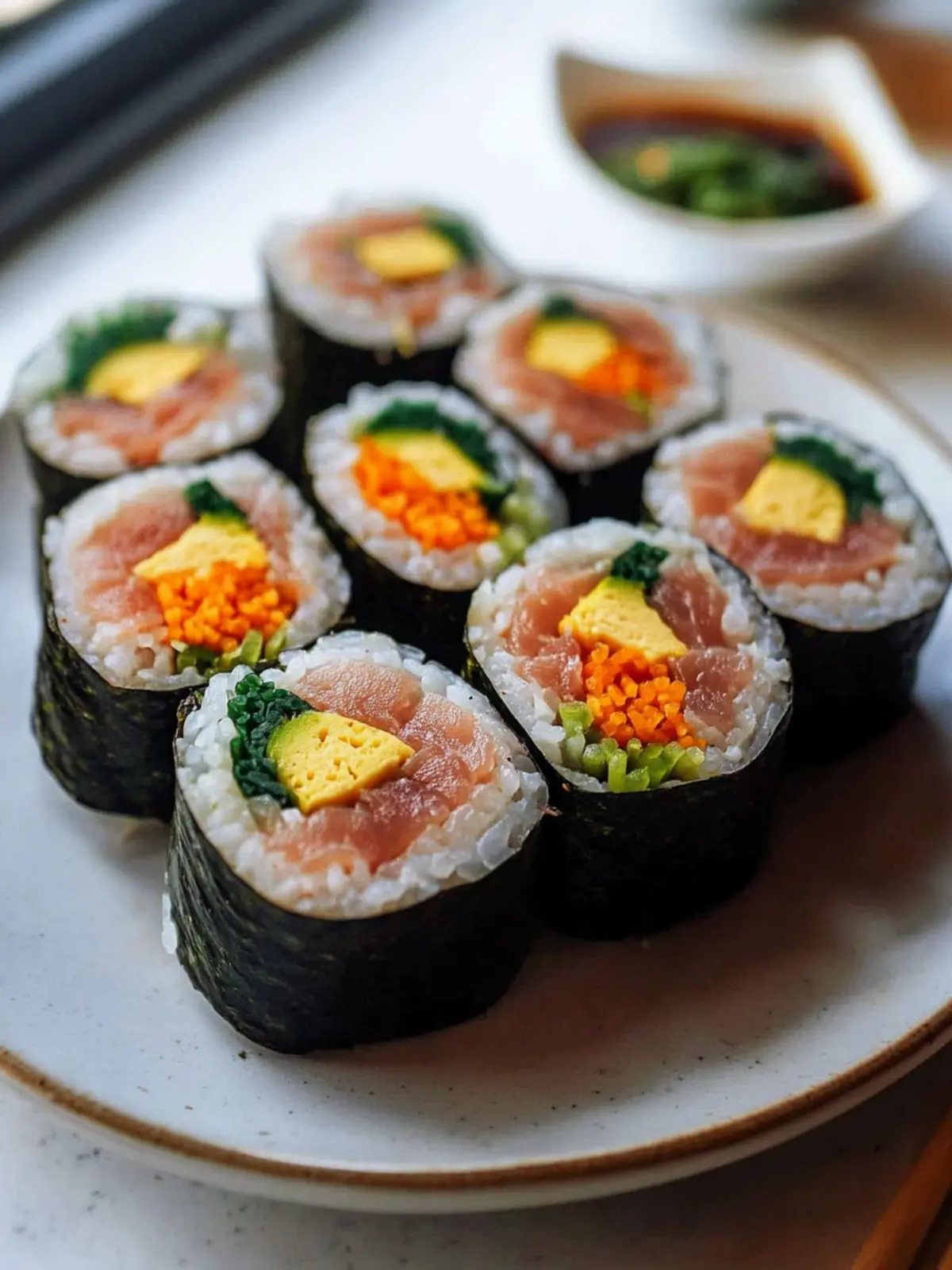
Spicy Tuna Kimbap Recipe FAQs
What type of rice should I use for Spicy Tuna Kimbap?
You should use short-grain white rice for the best results. It becomes sticky when cooked, which is essential for the perfect kimbap roll. Long-grain rice won’t provide the same texture and may cause the rolls to fall apart.
How should I store leftover Spicy Tuna Kimbap?
To keep your kimbap fresh, wrap the unsliced rolls tightly in plastic wrap and store them in the fridge for up to 1 day. Avoid slicing until you’re ready to serve to maintain the integrity and freshness of your rolls.
Can I freeze Spicy Tuna Kimbap?
Absolutely! You can freeze Spicy Tuna Kimbap for up to 2 months. Wrap the whole rolls tightly in plastic wrap and place them in an airtight container. When you’re ready to enjoy, thaw in the fridge overnight, but be sure to slice them after they’ve fully thawed for the best presentation.
What should I do if my filling is too watery?
If your filling appears too watery, make sure to drain all ingredients properly, especially the canned tuna and spinach. If it’s still too wet, consider adding a bit more gochujang or a small amount of breadcrumbs to absorb excess moisture. You can also reduce the quantity of mayonnaise to achieve the desired consistency.
Are there any dietary considerations for Spicy Tuna Kimbap?
Yes! To make a vegetarian version, simply substitute the tuna with chickpeas or imitation crab. If you have any allergies, ensure that none of the ingredients, like sesame oil or mayo, pose a risk. Additionally, serve your kimbap with care if anyone has seafood allergies, as cross-contamination can occur.
How can I enhance the flavor of my Spicy Tuna Kimbap?
To elevate the flavors, you can experiment with the ingredients! Consider using a bit of toasted sesame oil for an added nutty flavor, and feel free to adjust the amount of gochujang to suit your spice level. Including fresh cucumber slices or avocado can also add a creamy texture and enhance the overall experience.
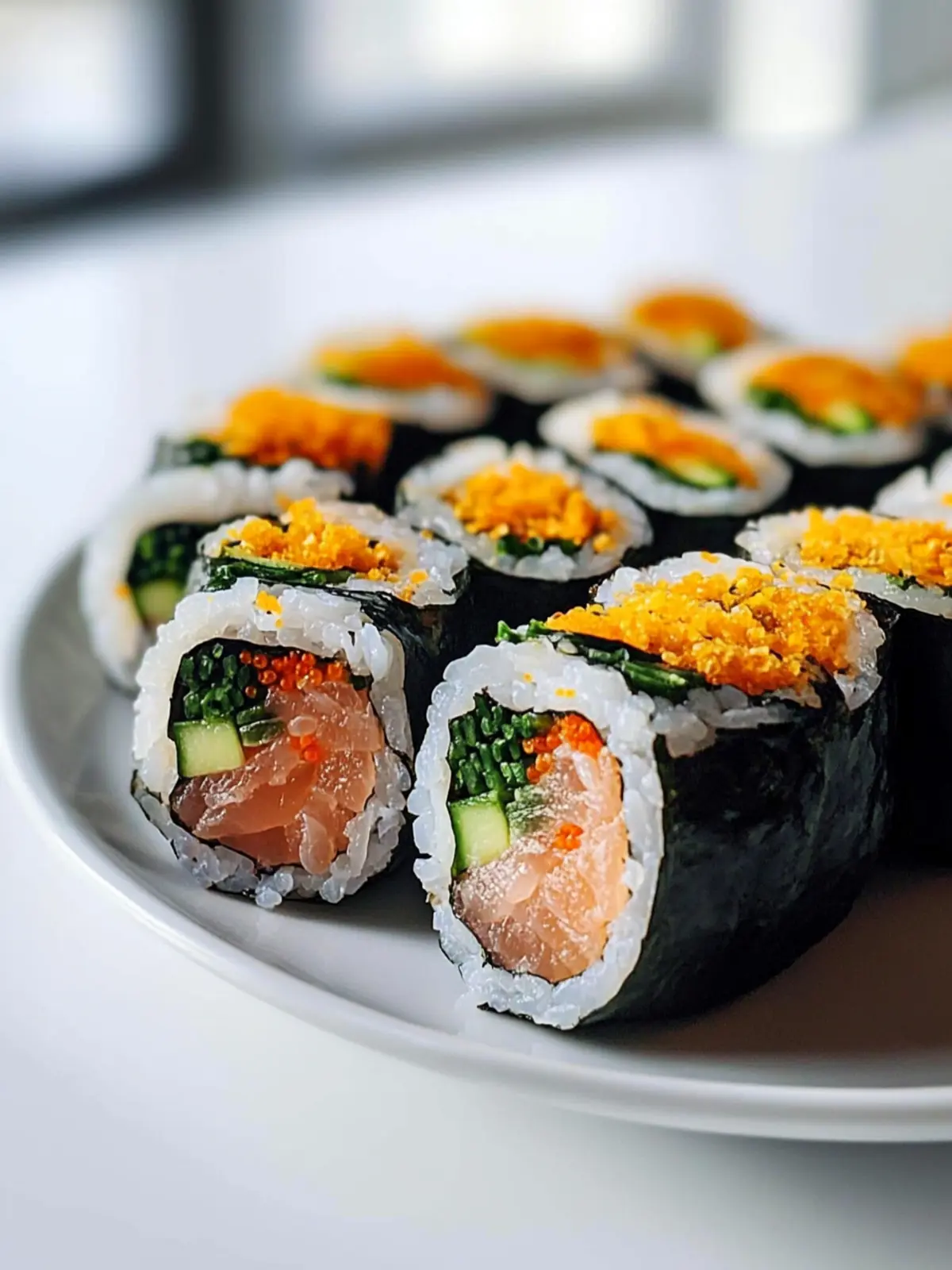
Spicy Tuna Kimbap: Your Quick and Tasty Lunch Solution
Ingredients
Equipment
Method
- Cook the short-grain rice according to package directions.
- Mix in the sesame oil and salt until evenly distributed.
- In a bowl, combine the tuna, mayonnaise, gochujang, sugar, and sesame oil. Stir to combine.
- Finely shred the carrot and cut the pickled radish into strips.
- Ensure spinach is well-drained.
- Lay a sheet of seaweed on a bamboo mat and spread seasoned rice on it.
- Place filling ingredients in a line down the center of the rice.
- Moisten the edge of the seaweed, roll it tightly, and seal.
- Slice the roll into 1-inch pieces for serving.